%20AdobeStock_473034336.jpeg?rect=0,1335,5717,1143&w=2560&h=512&auto=format)
What types of stored product moths are there - and where are they commonly found?
Several species of food moths can sneak their way into homes, businesses, and museums. Here’s a breakdown of the most common ones and their usual hiding spots:
Food-damaging moths (dry goods / stored products)
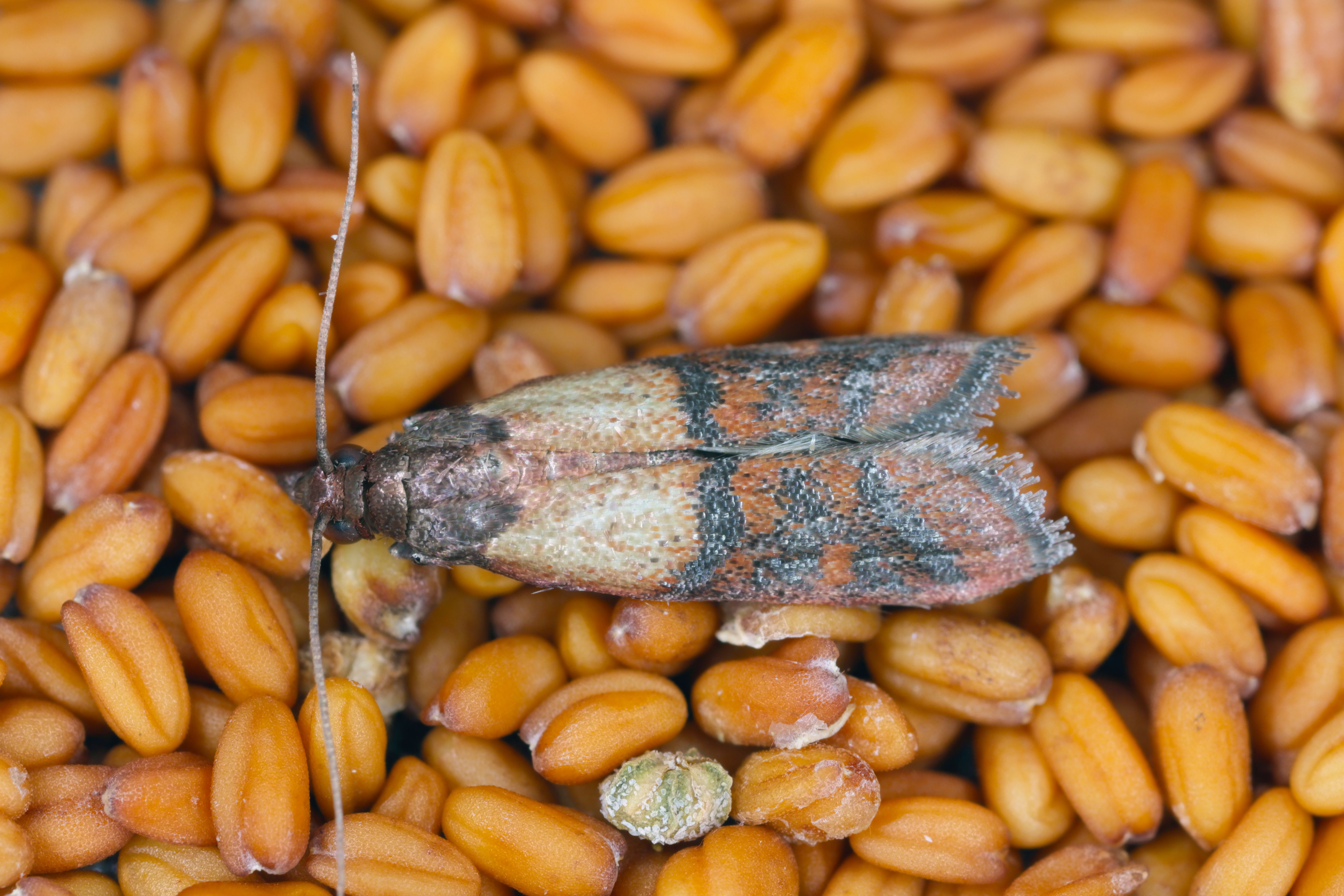
Indianmeal Moth (Plodia interpunctella)
Indianmeal moths are commonly found in pantry, warehouses, logistic shipping containers that contain flour, grain, cereal, dried fruit, nuts or chocolate products. They penetrate the packaging and contaminate the food with their webbing. Inside, they lay off their eggs that turn into larvae.
Mediterranean Flour Moth (Ephestia kuehniella)
The flour moth, also called the 'mill moth' can be found in flour mills, (industrial) bakeries or pantries. In industrial settings, they infest production lines by living on the inside of machinery where they feast on residues or they damage stocked products in the warehouse.
In pantries, they penetrate the packaging of old flour products. They cause webbing/cocoons in the flour, lay off their eggs, making the product clump and resulting in food contamination.
Almond Moth (Ephestia cautella)
These food moths prefer to eat dried fruits, cocoa, nuts and grains stored in grocery warehouses, food production sites and home pantries, especially if they are kept in bulk. The adults feed the larvae inside the packaging, causing visible frass and webbing.
Warehouse Moth / Cacao Moth (Ephestia elutella)
Like the name suggests, this pantry moth prefers packaged goods, chocolates and tobacco stored in warehouses. They contaminate the goods with eggs, webbing and extrements.
Angoumois Grain Moth (Sitotroga cerealella)
The grain moth prefers corn, rice, wheat and whole grain stored goods. Their larvae develop inside kernels making it hard to detect the damage until it's often too late. They are most commonly found in grain silos, mills, rural storage areas and agricultural facilities, especially where unprocessed whole grains are kept in warm, indisturbed conditions.
Oriental Fruit Moth (Grapholita molesta)
This cross-over moth who primarily lived in fruit torchards (peaches & apples) has new moved to warehouses, food shipping and pantries containing stored dried fruits or sweet products. The damage patterns resembles boreholes in fruit and contamination of the dried produce in storage.
Moth life cycle: development of a stored product infestation
Once inside, the infestation can escalate quickly. A single female moth can lay up to 400 eggs, usually directly on or near a food source. The eggs hatch within days, and the larvae immediately begin feeding — contaminating products with webbing, frass (insect droppings), and shed skins.
Larvae are also notorious for crawling away from the original source to pupate in nearby cracks, under shelving, or even in light fixtures.
In warm environments, pantry moths can complete their lifecycle in as little as 30 days. Without intervention, this means multiple overlapping generations per year. Infestations can easily go unnoticed until adult moths begin flying around or packaging is visibly damaged.
In warehouses and production halls, even a small, undetected population can grow rapidly and lead to cross-contamination, product recalls, and hygiene issues.
How do pantry moths get in?
"They seem to come from thin air"
Pantry moths often infiltrate homes, food storage areas, and production facilities through contaminated goods. The most common entry point is via packaged dry materials like tobacco or dry foods like flour, grains, rice, nuts, pet food, birdseed, or chocolate.
These products may already contain invisible moth eggs or larvae before they even reach the store shelf. In commercial settings, infested raw materials, poorly sealed packaging, the lack of a control procedure for incoming raw materials, or a lack of rotation in stock are frequent contributors.
It could also happen that adults come flying in through open windows, doors or docking gates, especially in the summer time.
What to do when you find food moths in your pantry or storage room?
- Discard all infested food and packaging immediately
- Clean pantry with hot, soapy water and disinfectant
- Freeze suspect food for 72 hours to kill eggs and larvae
- Use pheromone traps to catch adult males and monitor activity
It's important to note that a large or recurring infestation may need professional help. A pest control expert can identify hidden sources, seal off entry points, treat the area effectively, and prevent reinfestation.
The best way to get rid of moths? Professional moth treatment.
1. DETERMINATION
Determining the type of moth that has infested your pantry, storage or production is key to implementing the right prevention and control method. Furthermore, we will conduct a root cause analysis and trace all possible entry points and infested products / goods.
2. TREATMENT
We will draw up a pest prevention plan in accordance with regulations and standards. Our service team or technician will carry out the treatment (heat treatment, hang up insect lamps or pheromone traps) and repeat if necessary.
3. PREVENTION AND ADVICE
After the infestation has been controlled, it is crucial to set up monitoring to ensure ongoing prevention: SMART monitoring, Insect lamps or pheromone traps. You will receive advice on preventive measures such as infrastructural proofing or sanitation procedures to avoid future infestations.